Thunder Hoop Collection Shows Just How Much a Sequel Can Improve on the Original
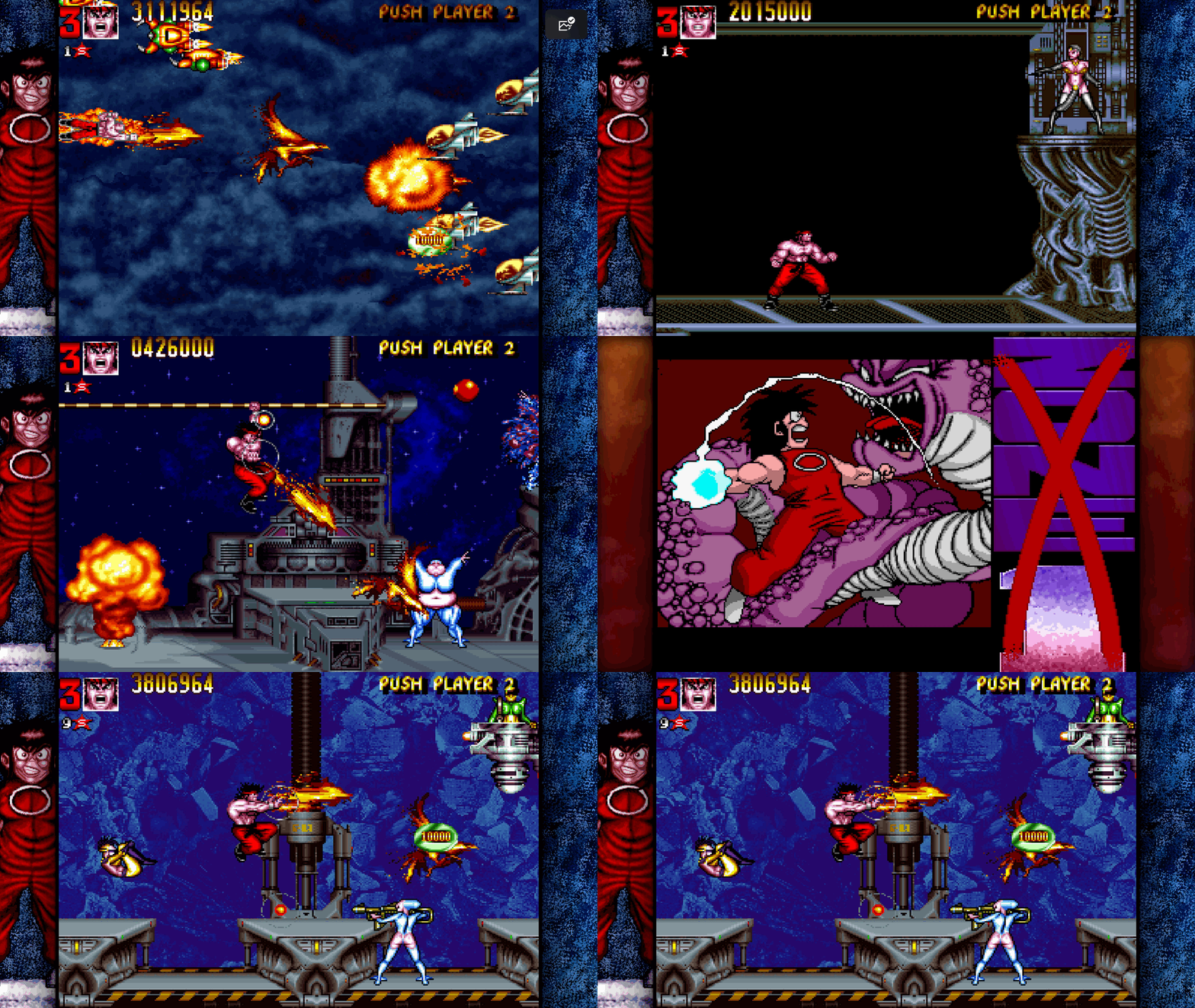
Thunder Hoop Collection includes two arcade games from the same series, but the experience of playing them could not be more different. Before I go much further, I want to make it clear that this collection is definitely worth owning, but there are some important details to discuss.
The original Thunder Hoop has some appealing qualities, especially its music and its unusual enemy-jumping mechanic, but I found the gameplay itself to be frustrating and tedious. Even on the easy difficulty, Stage 1 frequently places several hazards on the screen at once. On more than one occasion, I would successfully avoid one obstacle only to immediately collide with another.
This becomes more frustrating because when your character dies, you do not simply respawn at the exact point where you were defeated. As a result, difficult sections can become repetitive very quickly.
The collection does offer cheats, including infinite lives and the ability to select your starting weapon. These options are welcome, but in the case of the first game they do not completely solve the underlying problem. Infinite lives may let you continue trying, but they do not make an unfairly crowded section feel less tedious, and there is no invincibility option to directly address that issue.
Fortunately, Thunder Hoop Returns is a very different experience.
The sequel is a significant improvement and plays much more like a traditional run-and-gun game such as Contra. The direction of each stage is much clearer, there is considerably less platforming, and the platforming that remains feels much fairer.
Thunder Hoop Returns also handles failure more thoughtfully. In most sections, you simply respawn close to where you were defeated rather than being forced to repeat a large portion of the stage. During the occasional platforming sequences that require more precise timing, the game also provides checkpoints. These sections can still be challenging, but they feel reasonable rather than tedious.
There is also a small tactical element that occasionally reminded me of Sunset Riders. Although the game is not truly 2.5D, you can sometimes avoid enemy fire by moving between different vertical areas of the screen. This gives combat an additional layer of strategy beyond simply running forward and shooting.
The sequel also occasionally changes things up in unexpected ways. Near the final stage, there is a section where your character takes to the air and the game briefly shifts into a shoot-'em-up style sequence. As someone who enjoys that genre, I found this section especially fun, but even beyond that, it demonstrates that Thunder Hoop Returns is willing to introduce new ideas and keep the experience varied. Considering that the game was originally released in 1994, this kind of genre-switching feels especially inventive.
I was particularly impressed by how much more enjoyable the sequel felt after the first game. In fact, after completing Thunder Hoop Returns, I immediately felt like playing through it again.
Both games do share one mechanic that I found especially interesting. Although projectiles are the primary weapons, your character can also jump directly onto the heads of enemies. Doing so can stun them, and repeatedly landing on them approximately three or four times can defeat them entirely.
This almost gives the series a small Mario-style platforming element within an otherwise action-oriented game. It is a simple idea, but it helps give the series a distinct identity.
The protagonist's design also reminded me a little of Dragon Ball. In the original Thunder Hoop, the younger-looking hero somewhat resembles the youthful Goku, while his appearance in Thunder Hoop Returns brought adult Goku from Dragon Ball Z to mind. Whether this was an intentional influence or simply a visual similarity, it adds another interesting layer to the series' character design.
The music also deserves special mention. The original game has good music, but the soundtrack in Thunder Hoop Returns is excellent.
My favorite piece plays during the first and final stages of the second game, where the player moves from platform to platform. The music has an almost “free as a bird” quality to it that gives those sections a wonderful sense of momentum and openness. The boss music is also very effective and adds a lot of energy to the encounters.
The presentation of the collection itself is another major strength. QUByte has included a generous amount of archival material, including sound tests for both games, promotional artwork, instruction manuals, game summaries and even the original arcade owner's handbooks. These manuals go into surprising detail, including information about DIP switch settings.
That level of material makes the package feel less like a simple re-release and more like a celebration of the history of the series.
While I did not personally enjoy the first Thunder Hoop very much, I am still glad that it is included. In some ways, playing both games back-to-back makes the collection more interesting because you can directly see how much the developers improved the concept in the sequel.
The first game is almost a lesson in game design. It demonstrates how identifying weaknesses, reconsidering frustrating mechanics and refining an idea can lead to a much stronger experience. That principle applies beyond games as well: meaningful improvement often begins with honestly recognizing what did not work and then doing the hard work necessary to make it better.
Thunder Hoop Returns is the game that ultimately makes this collection easy to recommend. It is fast, enjoyable, memorable and much more polished than its predecessor.
Taken as a whole, Thunder Hoop Collection is a lovingly assembled package with strong archival extras, memorable music and a sequel that more than justifies the purchase.
Review copy provided by QUByte Interactive.
________________________________________
More articles:
Review: King's Blade Offers Classic Beat-'Em-Up Action With Impressive Depth and Smart AI Companions